Companies
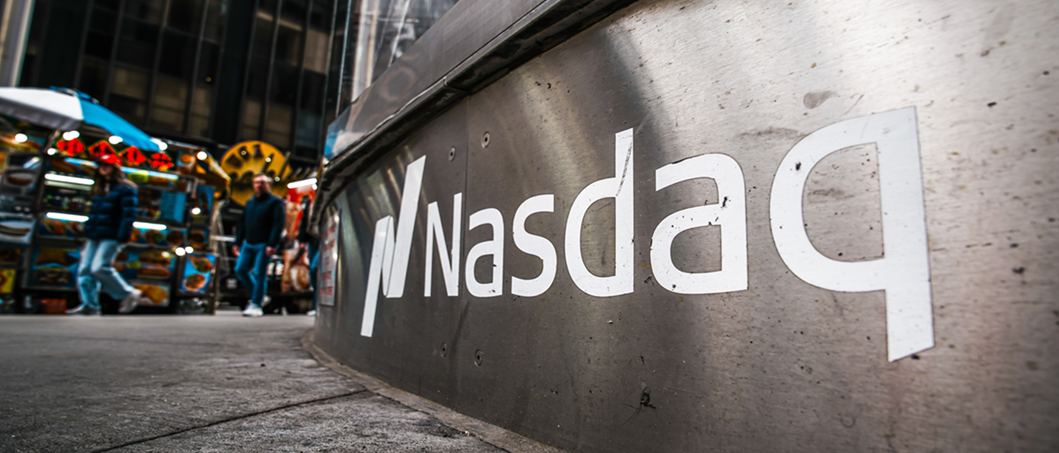
COMMENT. Under pressure from Elon Musk's SpaceX, the Nasdaq is changing the rules for the Nasdaq-100 Index. This has serious consequences.
Agreeing to a probationary period is not only common in the world of work. Newcomers to the stock market must also first prove that they are capable of meeting numerous requirements.
By no means are all shares listed on the stock exchange. If owners of unlisted shares decide to allow anyone to purchase shares, they list the shares on the stock exchange: a small stake, the majority, or the entire company. This is known as an Initial Public Offering (IPO). The motivation for this may be to raise capital and/or meet the financial needs of the existing owners. Once shares are listed on a stock exchange, anyone can buy them. Access is provided, for example, by banks or specialist brokers.
Following the IPO, the newly listed company faces numerous requirements. These include, for example, providing the public with timely information regarding important corporate events, financial reporting in accordance with the rules, and sound management practices (corporate governance). If new listings meet all the requirements placed upon them over a certain period, they have the chance to qualify for inclusion in an index. This is a desirable outcome. This is because members of an index receive increased attention from the public and investors. With the rise of passive, exchange-traded funds (ETFs), inclusion in an index automatically attracts further capital to the share. This is beneficial for the share price performance, at least in the short term.
A financial market index is designed to represent and measure the performance of a specific market, asset class, sector or investment strategy. The MSCI Emerging Markets Index, for example, represents the performance of equities from emerging markets worldwide. The Bloomberg Global Aggregate Bond Index, on the other hand, tracks a broad spectrum of global bonds, including government, corporate and secured bonds with investment-grade ratings. The construction of a financial market index is not random, but follows fixed rules regarding the selection of individual components, their weighting, the calculation of the index and the basic requirements for inclusion in the index. There is no standardised approach to index construction. Each index provider creates its own rules – and can change them.
Revolutionary overhaul of index rules
The rules for inclusion in the major US indices also vary. The composition of the Dow Jones Industrial Average, with its 30 constituents, is decided on an irregular basis by a five-member expert committee comprising editors from the S&P DJIA indices and the ‘Wall Street Journal’.
Different regulations apply to the S&P 500 and the Nasdaq 100 respectively1. The S&P 500 is the most important global equity barometer, currently comprising 503 constituents spread across all sectors2 . The Nasdaq 100 (101 constituents) includes numerous shares from major technology companies in its index, but is also joined by stocks from other sectors: for example, the soft drinks manufacturer PepsiCo and the ketchup producer Kraft Heinz can be found in the Nasdaq 100. Financial companies are traditionally excluded from the Nasdaq 100. This is stipulated by the regulations.
Companies seeking inclusion in the Nasdaq 100 must be listed exclusively on the Nasdaq Global Select Market or the Nasdaq Global Market. Both are stock exchanges. The security must have a free float of at least ten per cent. To be eligible for initial inclusion in the index, a security must have been listed and admitted to trading on an approved stock exchange for at least three full calendar months, not counting the month of initial listing. There are further requirements, such as an average daily trading turnover of at least five million dollars over three months.
In a decision dated 30 March 2026, Nasdaq significantly lowered the barriers to entry for inclusion in the index.3 From 1 May 2026, accelerated entry into the illustrious circle of the Nasdaq 100 will be possible as early as 15 trading days after an initial public offering. At the same time, Nasdaq is partially changing the rules for weighting within the index (see table). S&P Global, the financial agency behind the S&P 500, is also considering lowering the barriers. The index provider FTSE Russell is likewise considering a ‘fast-entry’ scheme for its US market indices and has been in a consultation phase since early April 2026.
It is no coincidence that this is happening now: with SpaceX, Elon Musk’s space company, the most spectacular IPO of all time is on the horizon. Musk had pushed for the rules to be changed, as reported by the Reuters news agency, among others. The Nasdaq has complied and, in return, can likely boast the SpaceX listing. The Nasdaq is both a stock exchange and an index provider.
The changes will have a noticeable impact. The key lever is the new fast-entry rule. Not only will it soon be unnecessary to have been listed for a long time; the previous rule that at least ten per cent of a company’s shares must also be tradable on the stock exchange (the so-called free float) will also be abolished. The real revolution, however, lies in the fact that on the Nasdaq, a low free float of up to 20 per cent will soon not be included 1:1 in the index weighting, but multiplied by a factor of 3, i.e. 3:1. Until now, there was no such rule: companies with a free float of less than ten per cent are not eligible for the Nasdaq 100 until 30 April 2026.
Take SpaceX, for example: the company could be valued at two trillion dollars at its IPO. However, only a small number of shares will be offered on the stock market. Exactly how many has not yet been determined. There is talk of just three to four per cent. That would correspond to $60 to $80 billion in free float, should SpaceX actually achieve a total valuation of $2 trillion. Under the new index rules, this $60 to $80 billion would be multiplied by a factor of 3. SpaceX shares would then be given an index weighting of $180 to $240 billion. To be included in the Nasdaq 100 quickly, a company must rank among the top 40 heavyweights. The threshold currently stands at 114 billion dollars.4 Thanks to the factor of 3, SpaceX is therefore highly likely to join this elite group shortly after its IPO – the new rules make it possible.

This rapid rise is no small matter: the Nasdaq 100 Index attracts the second-highest amount of ETF funds after the S&P 500. Most recently, more than 200 investment products tracking the Nasdaq 100 held over $600 billion.
A gateway for mega tech IPOs
With the rule changes, the Nasdaq is also likely to attract other mega IPOs, such as those of the AI companies OpenAI and Anthropic. This may be in the spirit of an index that aims to reflect the economy and take account of upheavals. However, the additional weighting change by a factor of 3 is a kowtow to Musk and the upcoming IPO hopefuls OpenAI and Anthropic. Reason: All other things being equal, the new Nasdaq 100 regulations lead to a higher valuation of the companies. The index mechanics override fundamental factors such as expected revenue and profit growth. Originally, the Nasdaq even planned to introduce a factor of 5 for free float, which highlights the arbitrariness of introducing this unusual rule. Instead of three per cent of listed shares, as much as 15 per cent would then have been included in the index weighting. From an investor’s perspective, this would have exacerbated the problems even further.
The situation is as follows: if, for example, SpaceX were to join the Nasdaq 100 with a market capitalisation of $240 billion, but only shares worth $80 billion were actually listed, this would create a massive imbalance between supply and demand. This is because ETFs are required to buy shares in proportion to their weighting, and many active fund managers would also be effectively forced to increase their holdings if their portfolios are heavily weighted towards the Nasdaq 100 or technology stocks. Up until the 15th trading day following the SpaceX IPO – the day of its inclusion in the index – there is therefore likely to be a massive surge in demand. Hedge funds are likely to jump in, drive up the price and cash in on the day of inclusion. All of this is happening largely detached from the business outlook and any fair value of the share derived from it. This ‘flipping’ strategy (jumping in and out of a share quickly) is unlikely to be limited to well-connected hedge funds. As SpaceX reportedly also intends to allow retail investors to participate in the IPO, they too could beat the ETFs to the punch – which amounts to legal front-running.5
The buying frenzy is likely to be followed by a hangover. Once the demand from the final buyers – who are likely to be ETF providers until the 15th trading day – has been satisfied, the share price faces a slump. Market participants buying solely on the basis of the new index mechanics are likely to exit; particularly as hedge funds often take positions using leverage, i.e. partly or wholly financed by credit. As SpaceX or other future mega-IPOs carry significant weight, this could drag down index funds that may have paid top prices. Mathematically, this should be manageable, as even with a market capitalisation of $240 billion plus a substantial price premium following its inclusion in the index, SpaceX’s share of the index is unlikely to exceed one per cent. However, sentiment would be dampened and could lead to the sale of ETFs. Studies show that many investors hold ETFs for only short periods anyway. An event such as the SpaceX IPO could further reinforce this trend. An artificially inflated free float, multiplied by a factor of three, is strictly speaking a low-float problem for investors: too few shares are circulating on the market.
However: whilst competing indices such as the S&P 500 weight shares according to their free float, the Nasdaq 100 Index has always weighted shares according to the listed market capitalisation of all outstanding shares (see Table Examples A and D).
The logic of an IPO is changing
However, with the new ‘fast-entry’ and ‘factor 3’ regulations, the logic behind IPOs is shifting. Previously, inclusion in major indices was a result of maturity, company size, share liquidity and profitability. Now, large IPOs can be structured in advance. A limited supply of shares generally drives up the price of sought-after, promising companies. The valuation rises significantly higher than would previously have been the case with the required higher free float of ten per cent without the factor rule. Furthermore, there is now the possibility of being listed on the Nasdaq 100 without a waiting period.
ETF providers must buy early, before a stable secondary market has even established itself. This creates a structural excess of demand. Particularly with low floats, a scarcity premium can automatically form – a valuation component that has less to do with fundamental data than with index mechanics.
Furthermore, shares are locked into ETFs as long as ETF investors do not sell the funds. Passive funds do not buy or sell securities based on fundamental data, but rather on the basis of index mechanics and the inflows and outflows of their investors. The lock-in effect in ETFs further significantly reduces the already considerably diminished number of available shares. This increases the risk of a sharp fall in the share price. Should there be fundamental disappointments, investors wishing to sell will face low demand. The share price could plummet significantly simply due to this lack of liquidity.
The Nasdaq is doing the US stock market culture no favours. It remains to be seen to what extent high volatility will set in for the share prices of SpaceX, OpenAI or Anthropic following a potential Nasdaq listing, and whether this will feed through to the Nasdaq 100 index. Anyone investing passively in the Nasdaq 100 via ETFs should certainly be aware of the higher volatility risk. It remains to be seen whether S&P Global, FTSE or other index providers will follow the Nasdaq’s lead due to competitive pressure. The answer as to whether they should do so is: better not.
References
Gehringer, A., Schürmann, C., Markt im Maßstab: Die Welt der Finanzmarktindizes, Flossbach von Storch Research Institute,16. Juni 2025
Hüfner, D., SpaceX-Börsengang: „Die schamloseste Manipulation, die ich je gesehen habe“, capital.de, 2. April 2026
Khomyn, M., Elon Musk’s SpaceX IPO is set to be the biggest in history, and it’s bending the rules to do it, switzer.com.au, April 20, 2026
Lipschultz, B., Ludlow, E., SpaceX Has Filed Confidentially for IPO Ahead of AI Rivals, Bloomberg, April 1, 2026
Nasdaq, Nasdaq Concludes Public Consultation on Nasdaq-100 Index® Methodology, March 30, 2026
S&P Global, S&P U.S. Indices Methodology, April 2026
Sen, A., Wang, E., Elon Musk's SpaceX weighs Nasdaq listing after seeking early index entry, sources say, Reuters, March 10, 2026
Schürmann, C., ETFs: Gloomy wake-up call from China, Flossbach von Storch Research Institute, 28 February 2025
___________________________________________________
1 To be included in the S&P 500 or the broader S&P 1500, newly listed companies must have been traded on a recognised stock exchange for at least twelve months prior to inclusion. In addition, there are requirements regarding profit performance, which must have been positive in the past
2 The indices do not always contain exactly the same number of shares as the index name suggests (500 or 100). Alphabet shares, for example, are represented by two share classes
3 Nasdaq explains the changes as follows: “Nasdaq Global Indexes periodically reviews index methodologies through standard governance processes, and feedback submitted during the consultation informed the final determination.”
4 Crowdstrike Holdings share on 21 April 2026
5 Front running is an illegal trading practice in which market participants (usually brokers) use non-public information about large client orders to open their own positions before these orders are executed. By deliberately exploiting price jumps triggered by the client order, they make profits at the client’s expense

About the author
Senior Research Analyst. Graduate business economist (FH). Previously a journalist and deputy head of ‘Money’ at WirtschaftsWoche. Book author (‘Die Bilanztrickser’) and lecturer at the private university BiTS in Iserlohn (accounting research).



Legal notice
The information contained and opinions expressed in this document reflect the views of the author at the time of publication and are subject to change without prior notice. Forward-looking statements reflect the judgement and future expectations of the author. The opinions and expectations found in this document may differ from estimations found in other documents of Flossbach von Storch SE. The above information is provided for informational purposes only and without any obligation, whether contractual or otherwise. This document does not constitute an offer to sell, purchase or subscribe to securities or other assets. The information and estimates contained herein do not constitute investment advice or any other form of recommendation. All information has been compiled with care. However, no guarantee is given as to the accuracy and completeness of information and no liability is accepted. Past performance is not a reliable indicator of future performance. All authorial rights and other rights, titles and claims (including copyrights, brands, patents, intellectual property rights and other rights) to, for and from all the information in this publication are subject, without restriction, to the applicable provisions and property rights of the registered owners. You do not acquire any rights to the contents. Copyright for contents created and published by Flossbach von Storch SE remains solely with Flossbach von Storch SE. Such content may not be reproduced or used in full or in part without the written approval of Flossbach von Storch SE.
Reprinting or making the content publicly available – in particular by including it in third-party websites – together with reproduction on data storage devices of any kind requires the prior written consent of Flossbach von Storch SE.
© 2026 Flossbach von Storch. All rights reserved.