Macroeconomics
1. Critical minerals as geoeconomic chokepoints
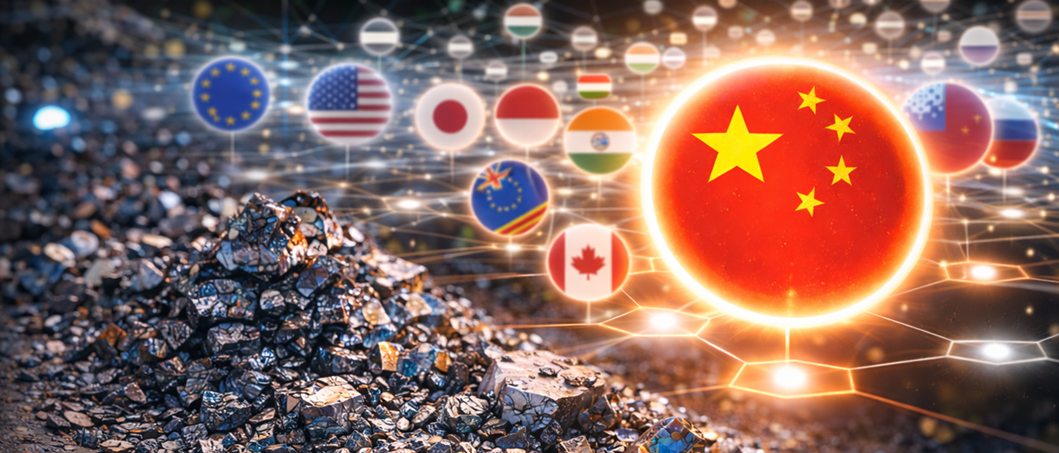
Power today is no longer measured only in missiles, markets, or manpower. It is increasingly gauged in minerals. Critical minerals have moved from the margins of industrial policy to the center of geoeconomic strategy. Once treated as technical inputs for specialized manufacturing, they are now indispensable to digital technologies, advanced defense systems, and global energy supply.
Their geopolitical salience became evident in 2010, when China curtailed rare earth exports to Japan during a diplomatic dispute. Although rare earths are only one subset of critical minerals, the episode revealed how supply chain dominance can translate into decisive political leverage (Gehringer, 2026).
More recent export controls on gallium and germanium, alongside Western semiconductor restrictions and disruptions linked to the pandemic and the war in Ukraine, have reinforced a broader lesson: economic dependence in critical minerals creates geoeconomic chokepoints. The underlying supply chains are marked by asymmetric dependence. Extraction is geographically concentrated, but refining even more so. China processes the majority of global lithium, cobalt, nickel, and rare earths. Through early investment, scale advantages, and sustained industrial policy support it secured a dominant position in midstream supply chains.
For the European Union, this configuration implies uneasy structural dependence that is insufficiently addressed by the current policy framework. The Critical Raw Materials Act marks an important step toward resilience, yet it remains conceptually anchored in the logic of the European Green Deal. Critical minerals are treated primarily as enablers of decarbonization rather than as instruments of geopolitical power. In an environment increasingly shaped by export controls, state-backed industrial strategies, and strategic rivalry, this framing appears incomplete.
The question, therefore, is not only how Europe can secure supplies for the green transition, but whether it can operate effectively in front of weaponized critical minerals. Neither isolation nor naïve faith in market adjustment offers a credible path. A more credible strategy would require embedding raw materials policy within a clearer geostrategic doctrine – combining diversification, domestic extraction and processing, strategic stockpiling, coordinated financing instruments, and selective trade defenses. Without such a shift, Europe can at best stabilize dependency rather than reduce it. This is excessively risky in a domain increasingly defined by power politics.
2. What makes a mineral “critical”?
Despite their growing prominence in policy debates, there is no universally agreed definition of critical minerals. What counts as “critical” is inherently dynamic (Hendriwardani & Ramdoo, 2022). It evolves with technological change, shifting demand patterns, industrial strategies, and geopolitical conditions. A mineral that is strategically marginal today may become indispensable tomorrow if new technologies emerge or supply risks intensify.
The perspectives differ here especially between academia and policy circles. Academic approaches tend to treat criticality as a concept rather than a fixed list (Srivastava & Kumar, 2024). Analyzed features regard the degree of supply risk, economic importance, substitutability, and systemic vulnerability associated with specific materials. Criticality assessments are typically multi-dimensional and comparative, designed to evaluate how exposure changes across time and across economies. In this view, criticality is not an intrinsic property of a mineral, but the outcome of structural conditions in global value chains.
Policy frameworks, by contrast, require operational clarity. Governments in the United States, the European Union, and other advanced economies work with formal lists of “critical minerals” or “critical raw materials,” periodically updated to reflect evolving priorities. These lists translate analytical assessments into concrete policy categories that guide industrial strategy, trade instruments, stockpiling decisions, and investment screening. While the composition of such lists differs across jurisdictions, they generally rest on a shared set of criteria.
Three characteristics recur across both academic and policy discussions. First, minerals are critical based on their high economic importance. Critical minerals are essential inputs for strategically significant sectors, including advanced manufacturing, defense systems, semiconductors, and clean energy technologies. Their absence would disrupt core industrial systems rather than isolated production lines.
Second, critical minerals bear high supply risk. Geographic concentration of underlying critical minerals’ extraction but especially processing and refining creates exposure to political instability, trade restrictions, infrastructure bottlenecks, or deliberate coercion. Limited substitutability and long project lead times further amplify vulnerability.
Third, critical minerals have important security and resilience implications. There is broad agreement that critical minerals matter for national security and supply chain resilience, even if the framing differs. Emphasis of academic research is more generically on systemic risk, geopolitical exposure, and network concentration (Heydari et al., 2025). Policymakers, particularly in the US, articulate the issue more explicitly in terms of economic security, strategic autonomy, and defense preparedness (USGS, 2022). The divergence lies less in substance than in emphasis: scholars analyze vulnerability, whereas governments operationalize it.
The underlying broader terminology reflects this intersection of analysis and policy but also reflects divergence across the terms. The label critical minerals is likely the main modern reference, but it is often lined up with closely related albeit not identical terms: “critical raw materials,” “strategic minerals,” and “technology-critical elements”. Critical raw materials, in particular, is officially used in the EU policy context and includes both metallic and non-metallic inputs at early stages of processing. Both strategic minerals and technology-critical minerals are less frequently used. Whereas the former tends to foreground national security and defense considerations, the latter highlights materials whose importance derives from specific high-tech applications.1
3. World supply and demand for critical minerals
As shown below in the comparison between the US and EU approaches, the precise lists of critical minerals (or materials) differ. However, some minerals are commonly viewed as critical. These include aluminum, cobalt, copper, gallium, germanium, graphite, lithium, manganese, nickel, rare earth elements, silicon, titanium, and tungsten. For a subset of these minerals for which data is available, Figures 1-6 show the global supply situation in 2024.


Across all materials, refining is more concentrated than mining. China holds dominant downstream positions in cobalt (78%), lithium (70%), graphite (96%), and rare earths (91%), and a strong position in nickel (43%) and copper processing (44%). This suggests that strategic vulnerability in critical minerals often lies less in geological scarcity than in midstream processing concentration.2
China’s dominance as a global supplier of refined critical minerals is expected to increase further (Fig. 7). Accordingly, it will serve the growing needs of critical minerals worldwide, especially related to “clean” technologies that stay at the core of the EU’s green policies (Fig.8).


4. US versus EU policy perspectives: two routes to “criticality” as strategy
Across advanced economies, criticality has become a policy trigger. Yet the US and EU have arrived at their respective approaches via different institutional routes. The United States draws on a long security-inflected tradition of “strategic and critical materials”, while the EU’s approach emerged more recently from competitiveness and industrial-policy concerns and has only lately acquired a more explicit security-resilience edge.
The US approach has roots in national defense planning. The Strategic and Critical Materials Stock Piling Act of 1939 explicitly links materials availability to national defense needs, institutionalizing the idea that certain inputs warrant public intervention and stockpiling. In the modern era, the framework was sharpened by Executive Order 13817 of December 20, 2017, which directed a federal strategy to ensure secure and reliable supplies of critical minerals and positioned mineral dependence as a strategic vulnerability. Today’s US system is legally and operationally anchored in the Energy Act of 2020, which tasks the Department of the Interior (via US Geological Survey, USGS) with maintaining a federal list of critical minerals and updating it periodically. The final 2025 US list contains 60 minerals, including – among others – aluminum, cobalt, copper, gallium, germanium, graphite, lithium, manganese, nickel, rare earth elements, silicon, silver, and uranium.3
The EU’s criticality agenda began as part of a broader competitiveness and resource strategy. The Raw Materials Initiative of 2008 called for identifying an EU-wide list of critical raw materials, as well as strengthening access and resilience. Over time, the EU institutionalized periodic list updates (in 2011, 2014, 2017, 2020, 2023). A major step-change was eventually made with the Critical Raw Materials Act (CRMA) of 2023, which set benchmarks and governance mechanisms for secure and sustainable supply.
Under the CRMA framework, the EU identifies 34 Critical Raw Materials (CRMs) and a narrower subset of 17 Strategic Raw Materials (SRMs) – those prioritized for resilience in areas such as energy, digital technologies, and defense/aerospace.4
The EU framework is further complicated by its interaction with national critical mineral strategies. While the CRMA establishes a Union-wide list, it does not fully overlap with national lists in countries such as France and Germany. The limited common core of minerals points to a degree of misalignment between EU and member state priorities and reflects differing strategic objectives: whereas some national lists emphasize domestic production and industrial policy, the EU framework adopts a broader focus on internal market resilience and supply security.
Table 1 shows the respective lists of minerals/raw materials and compares of the two approaches. While both the US and the EU rely on formal lists, the US model functions more as a security-driven industrial strategy, whereas the EU model operates as a single-market resilience regime that has only recently become increasingly security-conscious amid rising geopolitical tensions.5

Regarding the assessment of criticality, both the US and the EU apply a two-dimensional framework combining economic importance and supply risk. However, the operationalization of the two criteria differs. Under the US Energy Act of 2020 a mineral is defined as critical if it is essential to economic or national security and its supply chain is vulnerable to disruption. The US methodology emphasizes factors such as import dependence, concentration of production, lack of substitutes, and the role of the material in defense, energy, and high-technology applications. National security considerations are explicitly embedded in the definition, giving the assessment a strong strategic orientation.
The European Union applies a more quantitatively structured methodology. Criticality is determined through a formal assessment combining (1) economic importance, measured by the value added of downstream sectors, and (2) supply risk, calculated using indicators such as global production concentration, governance performance of supplier countries, trade reliance, and substitutability. The EU framework is more technocratic and internal-market focused, with security concerns incorporated through supply-chain resilience rather than explicitly defense-centered criteria.
These methodological differences are reflected in only partial overlap between the two lists. The EU excludes several minerals present on the US list, including lead, silver, tin, zinc, rhenium, rubidium, cesium and indium. Various reasons might explain these differences. Metals like zinc, silver, and tin are globally traded with diversified suppliers, so that the EU does not classify them as sufficiently supply-concentrated to meet its criticality threshold. Moreover, zinc and silver are mined or processed within Europe or sourced from diversified partners. Finally, materials such as rhenium (used for jet engines), cesium and rubidium (atomic clocks), and indium (advanced electronics) are more closely tied to high-end defense and aerospace technologies – areas where the US adopts a more expansive defense-specific, high-precision technological, and national security lens.
To the contrary, the EU list includes some bulk or industrial materials (coking coal, feldspar, strontium and phosphorus) not prominently featured in US strategic framing. This likely reflects stronger EU emphasis on industrial base resilience and internal market functioning, particularly for steel production (coking coal) and agricultural inputs (phosphorus).
5. Climate first, strategy second? The geopolitical blind spot of the CRMA
While the Critical Raw Materials Act (CRMA) represents a significant step toward strengthening Europe’s resilience in raw material supply chains, it lacks a convincing geostrategic core. The Act is deeply embedded within the European Green Deal framework and is framed largely as an instrument of climate governance rather than as a pillar of geopolitical and security strategy.
This framing has important implications. Policies rooted in climate governance tend to prioritize regulatory coherence, environmental safeguards, and long-term circularity targets. A security-driven framework, by contrast, would emphasize rapid capacity expansion, strategic stockpiling, and geopolitical risk mitigation – even at higher environmental cost. Compared to the United States, where critical minerals policy is explicitly linked to national defense and strategic competition, the EU approach remains primarily market-corrective and sustainability-oriented. Consequently, the CRMA does not fully internalize the geopolitical and industrial power dimensions of critical minerals policy.
This conceptual orientation becomes particularly problematic in a global market increasingly shaped by state capitalism, export controls, and strategic leverage. China’s dominance in refining and processing, as well as the United States’ aggressive industrial policy under the Inflation Reduction Act (IRA), reflect securitized and power-oriented approaches to mineral supply chains. By comparison, the CRMA establishes domestic benchmarks for extraction, processing, and recycling (10%, 40%, and 15% respectively), yet it does not fundamentally alter the EU’s reliance on regulatory facilitation and market coordination. Without robust financial instruments and coordinated industrial policy tools, these quantitative targets risk remaining aspirational rather than transformative.
Implementation challenges reinforce this concern. Although the CRMA introduces accelerated permitting procedures for designated “Strategic Projects,” procedural streamlining alone does not resolve deeper structural constraints. The European Court of Auditors (ECA) has repeatedly identified persistent weaknesses in EU raw materials policy, including slow project development, fragmented national implementation, and continued import dependency. These structural gaps raise doubts about whether the Act can materially shift Europe’s position in global supply chains (ECA, 2026).
A further limitation lies in the strong emphasis on recycling and circular economy measures. While circularity is indispensable in the long term, secondary supply cannot meet projected demand for energy transition technologies in the coming decades due to limited end-of-life material availability. The sustainability narrative embedded in the CRMA risks overstating the short- to medium-term substitutability of primary extraction with recycling. This may leave Europe structurally dependent on external suppliers during a period of intensifying geopolitical competition.
In front of intensifying weaponization of critical minerals, there is a need of a coherent recalibration strategy that requires mutually reinforcing shifts. Raw materials must be treated not only as enablers of decarbonization but as strategic assets. This implies integrating the CRMA more closely with trade defense instruments, foreign policy coordination, and industrial strategy. Diversification targets should be tied to concrete geopolitical risk assessments and regularly stress-tested. Moreover, recycling and substitution are crucial for long-term resilience, yet current recovery rates remain low for many critical materials. Circularity cannot substitute for primary extraction in the short to medium term. Relatedly, clear differentiation is also required between strategic time horizons: immediate security through diversified primary supply, and longer-term sustainability through circularity. Furthermore, strategic partnerships have so far improved dialogue but have not sufficiently strengthened supply security. A more effective approach would link partnerships to concrete project pipelines, financing packages, and long-term purchase commitments. Proposals such as a global mineral trust or coordinated club-based arrangements among like-minded countries merit serious consideration.
Ultimately, Europe faces a structural dilemma: it seeks strategic autonomy while remaining embedded in global markets. The solution does not lie in isolation, nor in naïve reliance on market correction, but in a calibrated reduction of its dependencies. The CRMA represents an important institutional foundation. Yet without clearer geopolitical positioning and deeper integration with security policy, it risks consolidating dependency rather than overcoming it. Europe’s capacity to thrive in an era of weaponized dependencies will depend on whether it can align its climate ambition with a credible geostrategic minerals doctrine.
References:
Baskaran, G., & Dady, S. (2026). Minerals at war: Strategic resources and the foundations of the U.S. defense industrial base. Center for Strategic & International Studies.
ECA (2026). Critical raw materials for the energy transition: Not a rock-solid policy. European Court of Auditors, Special Report 04/2026.
IEA (2025). Global Critical Minerals Outlook 2025. International Energy Association.
Gehringer, A. (2026). The geopolitics of rarity: Mapping strategic trade dependencies for rare earths. Flossbach von Storch Research Institute, Macroeconomics 20/01/2026.
Hendriwardani, M. & Ramdoo, I. (2022). Critical minerals: A primer. Intergovernmental Forum on Mining, Minerals, Metals and Sustainable Development.
Heydari, M., Mitchell, P., Cullen, L., Andrieu, B., Serrenho, A. C., & Cullen, J. (2025). A systematic review of resilience in the critical minerals supply chains, needed for the low-carbon energy transition. Renewable and Sustainable Energy Transition, 100127.
Srivastava, N., & Kumar, A. (2024). Critical minerals for energy transition: The emerging regime complex. The Extractive Industries and Society, 20, 101536.
USGS (2022). Geological Survey: 2022 final list of critical minerals. US Geological Survey, Department of the Interior.
1 The US government historically used the term “strategic and critical materials” in defense contexts (see, for instance, “Strategic and Critical Materials Stock Piling Act” of the US Congress of 1939 or Baskaran & Dady (2026) for a modern reference). Modern legislation (e.g., Energy Act of 2020) uses “critical minerals”.
2 For rare earth elements, Gehringer (2026) shows that China’s dominant position extends to several manufacturing products that use rare earth elements as intermediate production inputs.
3 The previous 2022 version of the list contained 50 minerals.
4 The CRMA sets benchmarks along the SRM value chain to be achieved by 2030: (1) at least 10% of annual consumption must come from EU extraction sites, (2) at least 40% of annual consumption should be processed within the EU, (3) at least 25% of annual consumption should be covered by recycling domestic waste, (4) at most 65% of annual consumption of each SRM is allowed to come from single third supplying country.
5 The CRMA is a direct response to the EU Council’s Versailles Declaration of March 2022 which – in front of the Russian invasion of Ukraine – underscores the need to “secure EU supply by means of strategic partnerships, [...] strategic stockpiling and […] circular economy and resource efficiency”.

About the author
Senior Research Analyst. Studies (Università di Roma), doctorate (Università di Torino). Since November 2019 Professor at the Technical University of Cologne & since July 2016 Privatdozentin at the Georg-August-University Göttingen.



Legal notice
The information contained and opinions expressed in this document reflect the views of the author at the time of publication and are subject to change without prior notice. Forward-looking statements reflect the judgement and future expectations of the author. The opinions and expectations found in this document may differ from estimations found in other documents of Flossbach von Storch SE. The above information is provided for informational purposes only and without any obligation, whether contractual or otherwise. This document does not constitute an offer to sell, purchase or subscribe to securities or other assets. The information and estimates contained herein do not constitute investment advice or any other form of recommendation. All information has been compiled with care. However, no guarantee is given as to the accuracy and completeness of information and no liability is accepted. Past performance is not a reliable indicator of future performance. All authorial rights and other rights, titles and claims (including copyrights, brands, patents, intellectual property rights and other rights) to, for and from all the information in this publication are subject, without restriction, to the applicable provisions and property rights of the registered owners. You do not acquire any rights to the contents. Copyright for contents created and published by Flossbach von Storch SE remains solely with Flossbach von Storch SE. Such content may not be reproduced or used in full or in part without the written approval of Flossbach von Storch SE.
Reprinting or making the content publicly available – in particular by including it in third-party websites – together with reproduction on data storage devices of any kind requires the prior written consent of Flossbach von Storch SE.
© 2026 Flossbach von Storch. All rights reserved.