Companies
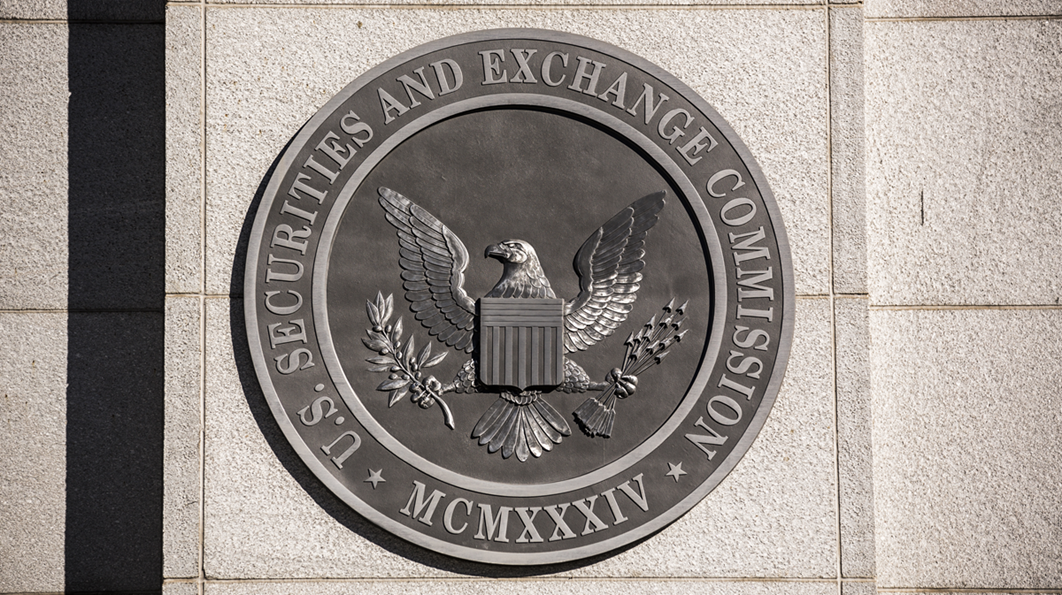
“We ensure that the markets function better. We protect investors from misconduct, promote fairness and efficiency in the securities markets, and facilitate the raising of capital for companies that wish to hire new staff, drive innovation and grow.” So, it is proclaimed in bold letters on the website of the Securities and Exchange Commission (SEC).1 The SEC is not just any regulatory body. As the central US securities and exchanges regulator, based in Washington D.C., it makes a promise to investors: in the US, you are safe from fraud and insider dealing. The US financial market seeks to win over investors not only with growth, liquidity and a share in innovation. With every investment, investors are also implicitly buying into strict rules for good governance.
The SEC has a three-part mandate: to protect investors, to ensure fair, orderly and efficient markets, and to promote capital formation. The authority is regarded as a benchmark by many securities regulators worldwide. The US regularly emphasizes the SEC’s independence – particularly the SEC itself. This distinguishes it, for example, from the German financial regulator BaFin, which is under the direct supervision of the Federal Ministry of Finance. Yet this institutional advantage of the SEC is now under threat.
Supreme Court changes the rules
The reason: at the end of June 2026, the US Supreme Court not only blocked US President Donald Trump’s plan to restrict the citizenship of babies born in the US, but also handed down far-reaching rulings on labor law, the Electoral College, consumer protection and financial supervision.
The starting point for the ruling was Trump’s dismissal of Rebecca Kelly Slaughter. Slaughter held a Democratic seat on the Federal Trade Commission (FTC), the competition and consumer protection authority, during Trump’s first term in office. Former US President Joe Biden nominated her for a further term. The FTC Act stipulated that commissioners may only be dismissed during their seven-year term on grounds of dereliction of duty, incompetence, inefficiency or misconduct in office (for cause’). Trump had dismissed Slaughter in March 2025 without accusing her of any breach of the law. Slaughter subsequently brought a legal action seeking reinstatement, which the Supreme Court has now refused. According to its ruling, the Supreme Court considers the statutory ‘for cause’ restriction on the dismissal of FTC commissioners to be unconstitutional (‘Trump v. Slaughter’).2
Whilst the FTC is directly affected by the Supreme Court’s ruling, the decision is likely to have an indirect impact on the status of similarly structured authorities such as the SEC. The crux of the matter is simple: in the US, a ‘Commission’ is often a specific form of independent federal agency.
Many independent US agencies are organized as commissions. Although their members are politically appointed, they should not be able to be dismissed during their term of office on the grounds of political differences. It is precisely this protection that the Supreme Court has overturned for the FTC. That is why the ruling is also relevant to the SEC. The five SEC commissioners are appointed by the US President. They must be confirmed by the Senate. The US President then appoints one of them as SEC Chair. Once confirmed, independent agencies such as the FTC or the SEC were previously shielded from partisan influence regarding the appointment of commissioners.3
The ruling now gives Trump and future presidents greater control and effectively brings an end to the non-partisan, independent nature of the regulatory bodies that oversee many areas of American life. “Not even the English Crown had such power when the Founders (of the Republic) rebelled against it,” wrote Justice Sonia Sotomayor, who voted against this landmark decision. “Although SEC commissioners have enjoyed a certain degree of protection against dismissal in the past, the ruling in the case of ‘Trump v Slaughter’ now calls this protection into question. Listed companies, investment advisers, securities brokers and other entities regulated by the SEC should prepare for potential changes in enforcement priorities, disclosure requirements and the regulatory agenda,” said Holland & Knight, a major US law firm specializing in capital markets law.
Investor protection has never been watertight
There is no doubt that the supposedly robust investor protection in the US has always been a bit of a myth. In recent history, the collapses of telecoms giant WorldCom and energy trader Enron, as well as the countless scandals during the mortgage crisis, shook Corporate America and the entire world. In response, the SEC launched investigations, and the Sarbanes-Oxley Act of 2002 was introduced – intended to improve the reliability of corporate reporting following numerous accounting scandals – alongside the Dodd–Frank Act of 2010, which reformed US financial market law to introduce stricter financial market supervision.
The supposed American advantage of a particularly stable financial market was never based on politics playing no role at all. For instance, the former head of the SEC, Gary Gensler, resigned voluntarily upon Trump taking office – to pre- his foreseeable dismissal. With its ruling, however, the Supreme Court has now fundamentally weakened the independence of many US authorities, particularly with regard to the protection of senior officials against dismissal. The President can now presumably dismiss senior officials at many such agencies without ‘cause’.4 This does not sideline the US Senate, which is composed of Democrats and Republicans. It continues to confirm the commissioners. However, confirmation is not the same as protection in office. Until now, the crucial buffer lay in the combination of the commission’s structure, party-political balance, staggered terms of office and limited scope for dismissal. It is precisely this buffer that has been eroded.
For investors, this marks a break in the governance structure of the world’s most important capital market. Gensler’s resignation, albeit under a different legal framework, signaled the start of a new era. It has now been confirmed by the highest court what heads of regulatory bodies must factor in going forward: their position may depend on whether their work is compatible with the President’s priorities. It would be naïve to believe that this does not alter the nature of regulatory oversight. It is no longer simply a matter of whether a broker is engaging in market manipulation, whether a crypto provider is misleading investors, whether a bank is concealing risks, or whether a listed company is cooking its books. For the first (or second) question that arises is: does the enforcement of the rules currently align with the White House’s political line? That does not necessarily mean that, in future, every SEC investigation, for example, will be politically driven. But it does influence them.
Compliance thrives on trust
Compliance depends not only on actual independence, but also on trust in that independence. If this trust erodes, incentives shift. Companies could neglect internal governance in the wake of the President’s desired, more lax controls, which could be to the detriment of their shareholders. Investors must ask themselves whether regulatory enforcement, investigation priorities and sanctions will still be pursued with the same rigor if they run counter to the prevailing political line.
Whilst the Trump family, for example, made billions from his crypto activities, millions of investors lost large sums of money. US financial experts are therefore raising the question of whether an investigation into Trump’s business dealings is warranted. It remains to be seen whether the SEC and the Department of Justice will investigate these dealings and the associated conflicts of interest independently and comprehensively.
The personal enrichment of Trump’s entourage is one thing. How a shift in power actually affects the infrastructure of the financial system is another. The Federal Housing Finance Agency (FHFA), for example, is issuing a warning about how political preferences can quickly impact systemically important markets. The FHFA supervises Fannie Mae, Freddie Mac and the Federal Home Loan Banks. Fannie Mae and Freddie Mac are central to the US mortgage market. They purchase mortgages from lenders, hold them or package them into mortgage-backed securities, and guarantee payments to investors. They are the engine of liquidity in the US housing market.
Since March 2025, William Pulte, a Trump confidant, has been a director of the FHFA. In June 2025, he instructed Fannie Mae and Freddie Mac to draw up proposals under which cryptocurrencies could be recognized as assets for reserve purposes in the risk assessment of mortgages – without prior conversion into dollars, provided that the holdings can be verified on regulated US crypto exchanges. At first glance, this may look like modernization. Owners of digital assets should be able to use them to demonstrate their creditworthiness. On closer inspection, however, the question arises: is a volatile market, whose regulatory framework is still in its infancy, being thrust into the very heart of US housing finance? Democratic senators rightly warned in a letter to Pulte that the inclusion of crypto-assets not converted into dollars could create risks for consumers, the housing market and the financial system.
The SEC was established following the crash of 1929 and the ensuing global economic crisis to restore confidence in public capital markets. This history should serve as a guiding principle. The US remains the world’s deepest capital market. But market depth is no substitute for institutional distance. It is precisely this distance that is now at stake.
Why is the independence of the US Securities and Exchange Commission (SEC) important for investors?
Christof Schürmann: The SEC has a three-part mandate: to protect investors, to ensure fair, orderly and efficient markets, and to promote capital formation.
Now there is a ruling by the US Supreme Court that changes the previous situation
Schürmann: Yes. The US Supreme Court has significantly weakened the protection afforded to senior officials of US government agencies against dismissal. This gives the US President and future administrations greater influence. For example, the head of the SEC could soon be sacked overnight without any justification.
What consequences might this have for companies and investors?
Schürmann: Companies and investors must expect that priorities in the enforcement of regulatory rules will be more closely aligned with political directives – in a spirit of pre-emptive compliance, so to speak. This, in turn, may undermine confidence in the regulator and prompt investors to no longer exercise their rights as they have done in the past.
Why does the commentary also address the role of cryptocurrencies in the mortgage market?
Schürmann: This example illustrates how political decisions can have an impact on key areas of the financial system. The idea of using cryptocurrencies as potential collateral for property loans is therefore also – or indeed primarily – attributable to the appointment of a confidant of the crypto-friendly US President to head a key regulatory authority. This could quickly give rise to risks for consumers, the property market and the financial system.
__________________________
1 In English
2 www.supremecourt.gov/opinions/25pdf/25-332_qn12.pdf
3 Incidentally, the Supreme Court does not apply the same logic to the Federal Reserve; see ‘Trump v. Cook’, also decided on 29 June 2026, www.supremecourt.gov/opinions/25pdf/25a312_5468.pdf
4 Although the SEC Act of 1934 does not contain an explicit clause stating that SEC Commissioners may only be dismissed by the President ‘for cause’ — that is, for breach of duty, for example — this protective effect is assumed or derived from the structure of the Act

About the author
Senior Research Analyst. Graduate business economist (FH). Previously a journalist and deputy head of ‘Money’ at WirtschaftsWoche. Book author (‘Die Bilanztrickser’) and lecturer at the private university BiTS in Iserlohn (accounting research).


Legal notice
The information contained and opinions expressed in this document reflect the views of the author at the time of publication and are subject to change without prior notice. Forward-looking statements reflect the judgement and future expectations of the author. The opinions and expectations found in this document may differ from estimations found in other documents of Flossbach von Storch SE. The above information is provided for informational purposes only and without any obligation, whether contractual or otherwise. This document does not constitute an offer to sell, purchase or subscribe to securities or other assets. The information and estimates contained herein do not constitute investment advice or any other form of recommendation. All information has been compiled with care. However, no guarantee is given as to the accuracy and completeness of information and no liability is accepted. Past performance is not a reliable indicator of future performance. All authorial rights and other rights, titles and claims (including copyrights, brands, patents, intellectual property rights and other rights) to, for and from all the information in this publication are subject, without restriction, to the applicable provisions and property rights of the registered owners. You do not acquire any rights to the contents. Copyright for contents created and published by Flossbach von Storch SE remains solely with Flossbach von Storch SE. Such content may not be reproduced or used in full or in part without the written approval of Flossbach von Storch SE.
Reprinting or making the content publicly available – in particular by including it in third-party websites – together with reproduction on data storage devices of any kind requires the prior written consent of Flossbach von Storch SE.
© 2026 Flossbach von Storch. All rights reserved.