Society & Finance
“Higher interest rates lead to the economy running leaner, more geopolitical instability leads to more volatility, and increased regulation leads to slower growth and increased costs of innovation. Given this outlook, we’ll need to operate more efficiently than our previous headcount reduction to ensure success.”
Mark Zuckerberg (2023)
1. The hyperscalers’ investments and redundancies
Artificial intelligence is not only astonishing the world with searches completed in a matter of seconds, impressive programming capabilities and autonomous driving. The rises in share prices and investment expenditure by the major technology firms are also impressive (Fig. 1). The five hyperscalers (Amazon, Microsoft, Google, Meta, Oracle) have announced investments totalling more than 800 billion dollars for the AI of the future by 2026 (Levine 2026) — around 80 per cent more than in 2025 (Crosley 2026). By 2027, this figure is expected to reach 1,000 billion dollars (Adams et al. 2026).
The AI boom is also fuelling speculation about the future of work and the labour markets. On the one hand, AI companies are hiring heavily; on the other, fears of job losses are rife, most recently even emanating from the AI sector itself. It is reported that since spring 2022, the technology sector in the US has cut hundreds of thousands of jobs. In 2023, Mark Zuckerberg declared a ‘Year of Efficiency’ and announced the loss of 15,000 jobs (Zuckerberg 2023). He set out the guiding principles: ‘flatter is faster’, ‘leaner is better’, ‘keep technology the main thing’, invest in tools to get more efficient’ and ‘in-person time helps build relationships and get more done’.
The high level of planned investment is fuelling fears of job losses, as AI can perform many tasks better than humans. As early as 2014, Brynjolfsson and McAfee (2014) identified AI as a universal helper that permeates all areas of life. Intelligent robots would take over monotonous and dangerous tasks in factories. According to futurist Martin Ford (2021), AI and robotics will replace many highly skilled knowledge-based professions (e.g. lawyers, radiologists or software developers) and trigger a phase of structural unemployment and growing inequality. According to tech billionaire Elon Musk, AI and robotics can perform almost any task better and more cheaply than humans. No one would need to work to earn a living any more (Ray 2026). “In the future, physical work will be a choice.” The forecasts for the AI-driven world of work of the future range from heaven to hell. Which scenario is the most likely? And what role does currency stability play in the impact of AI on productivity and labour markets?

2. Types of unemployment from a historical perspective
Until the Industrial Revolution, there was virtually no unemployment in the modern sense, as most people had to work in agriculture to support themselves. People were embedded in social structures such as the family, manorial systems, villages, monasteries or guilds, where they found work or, when needed, social support. Because productivity was low, people had to work long hours to secure their livelihoods. Waves of unemployment first emerged during the Industrial Revolution, during the Great Depression and in the post-war period of the 1970s – though not on a permanent basis and for different reasons.
a. Technological unemployment during the Industrial Revolution
Karl Marx described the emergence of unemployment and impoverishment in the wake of the Industrial Revolution, focusing on 19th-century England. Thanks to improved farming methods and new machinery, the same amount of agricultural land could be cultivated with fewer workers. Through enclosures1, common land was privatised and landowners created large areas of pasture for more profitable sheep farming. As a result, small farmers often lost their rights of use, their jobs and their livelihoods, and were henceforth forced to offer their labour for wages in the cities, where large-scale industrial production facilities for textiles and steel products were emerging with the aid of machinery. As vast numbers of people flocked from the countryside to the cities, employers were able to drive wages down to the subsistence level.
Observing this development prompted Marx (1867) to formulate a theory of crisis. Driven by the pursuit of profit, capitalists acquire machinery, the stock of which grows faster than the demand for labour. More and more people become unemployed until the ‘industrial reserve army’ rises up against the capitalists and their economic system. The machine-breakers (‘Luddites’) of the early 19th century destroyed mechanical looms because they saw their livelihoods under threat. In Silesia, the weavers’ revolt took place in 1844 (Hauptmann 1892). More recently, resistance has grown in the USA against the construction of data centres. ‘The AI Backlash Has Tech Executives Fearing for Their Lives’, as a headline reads (Ellis et al. 2026).
b. ‘Austrian’ unemployment
In the overinvestment theory of Mises (1912) and Hayek (1931), excessively low interest rates trigger too much credit-financed investment, leading to an unsustainable boom. The share prices of companies and banks, which make higher profits during the boom, rise. This rise in share prices – often fuelled by the prospect of huge profits resulting from groundbreaking innovations – can lead to a wave of speculation in which share prices become detached from their fundamental values. When labour supply becomes scarce, wages rise, forcing companies to raise their prices.

The central bank must then raise interest rates to combat inflation. The benchmark against which the profitability of investment projects is measured is set higher, meaning that many unprofitable investment projects must be abandoned. The bankruptcy of the first companies leads to the bankruptcy of others, resulting in unemployment during the downturn. This unemployment is not the consequence of technological progress, but of monetary policy mistakes that have led to exubarance.2 Unemployment causes wages and prices to fall, which is the prerequisite for the emergence of new companies and a new economic upturn that creates new demand for labour.
Hayek (1931) described the ‘golden 1920s’ in the USA as such a boom driven by overinvestment. Following the recession of 1920–21, he argued, the US Federal Reserve triggered a credit expansion – and thus excessive investment in durable capital goods – by cutting key interest rates. The resulting economic upturn was accompanied by excessive rises in share and asset prices, fuelled in part by the euphoria surrounding the innovations of Fordism.3 Fig. 2 shows the steep rise in the price-to-earnings ratio of the S&P 500 during the 1920s. The speculative boom came to an abrupt end with Black Friday in October 1929, after the Federal Reserve Bank had raised interest rates in response to rising inflation. Unemployment rose dramatically not as a result of technological progress, but primarily due to the adjustment crisis following the bursting of the bubble (Fig. 3).4
c. ‘Keynesian’ unemployment
Against the backdrop of soaring unemployment during the Great Depression, John Maynard Keynes (1936) argued that the state should tackle unemployment through debt-financed public spending. By investing in roads, railways, ports and public buildings, the state would generate additional demand for labour, whilst avoiding the creation of additional production capacity – which would remain unused during the crisis. The central bank should lower interest rates to boost private investment.5 Keynesian ideas were reflected from 1933 onwards for instance in the New Deal of US President Franklin D. Roosevelt, who created millions of jobs through road, bridge, school, cultural and afforestation projects.6 In Germany, the National Socialists eliminated unemployment through public construction projects, rearmament and compulsory military service. In effect, the expansion of employment in the public sector served to conceal unemployment.
After the Second World War, high unemployment arose because the production sites had been destroyed (Germany) and soldiers were returning from the war (Germany and the USA). The stabilisation of currencies under the Bretton Woods system, the liberalisation of world trade under the General Agreement on Tariffs and Trade (1944) and market-oriented reforms in the defeated nations of Germany and Japan led to high economic growth, which curbed post-war unemployment. Unemployment was moderate in the 1950s and 1960s (Fig. 3). In Germany, the economic and monetary reform of 1948 marked the starting point for impressive productivity gains, which completely eliminated the high post-war unemployment by the end of the 1960s (Schnabl 2024).

In academic circles, Keynes’s theories gained acceptance in form of counter-cyclical economic policy (Samuelson 1948). Government-debt-financed spending programmes and interest rate cuts by central banks increasingly dominated the economic policy agenda during downturns. Based on the modified Phillips curve, the belief spread that expanding the money supply and inducing inflation could reduce real wages and unemployment (Samuelson and Solow 1960). However, as trade unions increasingly anticipated inflation in their wage negotiations, wage-price spirals emerged in the 1970s, which had a negative impact on investment and employment due to rising uncertainty. This gave rise to high ‘Keynesian unemployment’ (Fig. 3), which was perpetuated by the (debt-financed) expansion of social security systems.
3. Monetary stability, technical progress and unemployment
This shows that unemployment is linked in various ways not only to technological progress but also to the design of fiscal and monetary policy. Fiscal and monetary policy are often closely interlinked, because in the longer run expansionary fiscal policy is only possible through an expansionary monetary policy. If monetary policy remains restrictive, then debt-financed government spending raises lending rates, which ultimately forces governments to cut spending through the disciplining function of the financial markets.
a. Technological progress and unemployment under the gold standard
The Industrial Revolution took place at a time when gold and silver dominated as money, and when the emerging paper money was backed by gold (the gold standard). According to North (1990), institutions such as the gold standard reduce uncertainty and thereby create incentives for innovation and investment. According to Polanyi (1944), the gold standard, industrialisation and free trade were closely intertwined in the 19th century. The gold standard made investment and trade predictable due to stable prices and exchange rates. Industrialisation required large and stable markets, which were fostered by free trade.
Although the adoption of new technologies, facilitated by the gold standard, did result in the loss of many jobs, John Stuart Mill (1848) observed that productivity gains, through falling prices and rising demand, gave rise to new businesses and sectors of the economy. In the United Kingdom, where the gold standard had been in place since 1821, firms passed on the benefits of their productivity gains to consumers and to workers in the form of falling prices and rising wages (Fig. 4).7 Currency stability contributed to the long-term elimination of technological unemployment through its positive effect on technical progress and investment. Higher productivity levels not only allowed real wages to rise but also led to a reduction in working hours. Fig. 5 shows the continuous decline in working hours from a historical perspective.


b. Unemployment caused by monetary instability
In the overinvestment theory of Mises (1912) and Hayek (1931), monetary policy mistakes cause not only cyclical fluctuations but also fluctuations in unemployment. Too low interest rates to an excessive rise in the demand for labour, causing unemployment to fall. Wages and inflation rise, which ultimately renders many investment projects unprofitable. If this leads to a crisis and unemployment rises, according to Schumpeter (1911) and Hayek (1931), wages must fall again in order to eliminate unemployment.8 Keynes, however, countered that wages are rigid downwards because workers resist nominal wage cuts. This can mean that, once the exuberance has run their course, unemployment only falls after a significant delay.
Keynes (1936) therefore did not recommend to combat unemployment through painful austerity and nominal wage cuts (“In the long run, we are all dead.”), but rather through debt-financed government spending. As this generally leads to rising interest rates and interest burdens, central banks tended in practice to support expansionary fiscal policies with expansionary monetary policies. However, the resulting inflation has a negative impact on innovation, investment and growth because it increases uncertainty. In the 1970s, the highly expansionary fiscal and monetary policies did not come along with falling unemployment, but with a significant rise in unemployment (Fig. 3). Monetary instability dampened productivity gains and prevented the reduction of unemployment through the emergence of new firms and economic sectors. American industry was regarded as ossified and lacking in growth (Thurow 1980).
c. Productivity gains and the reduction of unemployment through monetary stabilisation
The stagflation of the 1970s paved the way for the ‘monetarist counter-revolution’. Milton Friedman (1970) argued that inflation was always and everywhere a monetary phenomenon. Since there was no permanent trade-off between low inflation and unemployment, inflation had to be curbed by controlling the growth of the money supply. When Paul Volcker was appointed Chairman of the Federal Reserve in the US in 1979, inflation was in double figures. The unemployment rate stood at 7.1 per cent in 1980, having been 3.5 per cent in the late 1960s. Volcker’s radical increase in the base rate created strong pressure to adjust and thus forced a far-reaching restructuring of American companies, paving the way for the IT-driven surge in productivity of the 1990s. A low point of the unemployment rate was reached in 2000 at 4.0 per cent, but by then a speculative bubble in the IT sector – fuelled by interest rate cuts in the wake of the Asian crisis – had already artificially inflated labour demand (see Chapter 4).

The key technological foundations for information technology – semiconductors, microprocessors and the first personal computers – had already emerged between the 1950s and the 1970s. By the late 1970s, changes in regulation had given pension funds access to the venture capital market, and from then on, together with university endowments, insurance companies and wealthy private individuals, they formed the most important source of funding for new technologies (Gompers and Lerner 2001). Interest rate rises in the US contained inflation and accelerated the attractiveness of American financial investments and the financialisation of the US economy (Krippner 2011).
As a result, the venture capital market grew strongly in the 1980s, aided in part by the inflow of foreign capital, particularly from Japan and Taiwan (Kenney et al. 2004). Following a period of slow productivity growth in the 1970s and 1980s, the surge in technological progress – driven by information technology – finally materialised in the high productivity gains of the 1990s (Jorgenson et al. 2008, Fig. 6).9 This points to a significant lag between the diffusion of information and communication technologies and macroeconomic productivity gains, although the decline in the unemployment rate in the US had already begun in the 1980s (Fig. 3).
4. Monetary Policy, Artificial Intelligence and Unemployment
The boom in artificial intelligence is closely linked to monetary policy, high potential productivity gains and (future) developments in the labour markets.
a. Monetary policy and excesses in AI markets
The trend in share prices relating to artificial intelligence can be understood on the basis of the overinvestment theory of Mises (1912) and Hayek (1931) (Schnabl 2025). Since the turn of the millennium, the major central banks have continually lowered key interest rates and expanded their balance sheets. With the rise in inflation in 2021 and 2022, the major central banks have indeed raised key interest rates and reduced their balance sheets. However, from a historical perspective, key interest rates remain low, central bank balance sheets are bloated as a proportion of gross domestic product, and real interest rates are low. Weak growth and structural rigidities in East Asia and Europe10 are contributing to low key interest rates in those regions, thereby contributing to a significant outflow of capital to the US, where interest rates are higher.

In the US, too, growth prospects are limited in most sectors, which is why the still excessive liquidity appears to have concentrated on artificial intelligence due to its high future potential. This may have fuelled a speculative bubble in this sector that significantly exceeds the scale of the dot-com bubble at the turn of the millennium (Fig. 7).11 Whilst the Magnificent Seven (Apple, Microsoft, Alphabet (Google), Amazon, Meta Platforms, Nvidia and Tesla) have so far financed their investments through cash flow, an immense credit-fuelled investment boom has begun, following the pattern of Hayek’s overinvestment theory (Fig. 1). Private investment in AI-related sectors—specifically software, computers and peripherals, communications equipment, and data centers—has once again risen sharply, even when adjusted for inflation (Fig. 8). J.P. Morgan estimates the volume of the planned AI infrastructure, including energy supply, at 5,000 billion dollars (Wigglesworth 2025).

b. Artificial intelligence and employment effects in the AI sector
Since the onset of the AI boom, employment among the ‘Magnificent Seven’ has grown strongly, rising from 324,000 full-time employees in 2011 to around 2.4 million at present (Fig. 9). The rise in employment was initially substantial and accelerated further from 2019 onwards. From 2021 onwards, it has levelled off noticeably, with only a slightly positive upward trend. The boom in the AI industry has thus had positive effects on the labour market, as no significant job losses due to AI have become apparent to date. Accordingly, the unemployment rate in the US is at a relatively low level from a historical perspective (Fig. 3).
On the other hand, AI offers significant potential for cost savings in other sectors.12 Artificial intelligence is expected to reduce jobs primarily in areas where tasks are standardised, repeatable and information-based. Brynjolfsson and McAfee (2014) and Acemoglu (2024) see this happening particularly in information-intensive services.13 Tasks that can be made more efficient include research, documentation, contract review, document drafting, translation and graphic design. Sectors and areas of business likely to be affected include administration, customer service, banking, insurance, the legal sector, accountancy, marketing, media, software development, human resources and manufacturing. Under the banner of the ‘Great Flattening’, corporations are already scaling back management layers (Boyle 2026 and Le 2026).14

In theory, the long-term impact on employment is therefore uncertain. The OECD (2023) distinguishes between a displacement effect – where AI replaces human labour in certain tasks, leading to job losses – a productivity effect – where higher productivity reduces costs and increases demand, thereby creating additional jobs – and a reinstatement effect – where AI creates new tasks, professions and activities, which in turn generate new jobs. The overall impact on employment depends on which of these effects predominates in the long term. Whilst Acemoglu (2024) sees a negative overall employment effect from AI, the World Economic Forum (2025) estimates that 78 million additional jobs will be created worldwide by 2030. This would see 170 million new jobs offset by 92 million job losses. The estimates thus suggest that there will be no mass unemployment as a result of artificial intelligence. However, significant changes in the structure of the labour market are on the horizon, which will require sufficient flexibility in labour markets to prevent structural unemployment from arising.
c. Employment effects of AI depending on monetary policy
Which effect prevails, and how this aligns with the hoped-for job-creating productivity gains, could depend largely on monetary policy. For instance, since the turn of the millennium, the groundbreaking internet revolution has not led to any noticeable productivity gains during a phase of increasing monetary and fiscal expansion. In Fig. 6 average productivity gains for this period are comparatively high, but have to be partially attributed to a rise in productivity in the US financial sector due to sharply rising prices of mortgage-backed securities.15 The so-called dot-com bubble, during which the price-to-earnings ratio of the S&P 500 also rose sharply around the year 2000 (Fig. 2), initially caused demand in the labour market to rise. There were labour market bottlenecks, particularly for IT jobs (Freeman and Aspray 1999), and the unemployment rate fell.
However, this trend was reversed when the dot-com bubble burst. According to Gordon (2016), whilst the IT revolution did bring about enormous productivity gains in certain sectors, these were smaller for the economy as a whole because large sectors – particularly public services – made hardly any progress in terms of productivity. Whilst Cowen (2011) acknowledges that computers and the internet have massively increased the marginal productivity of highly skilled knowledge workers, he identifies only modest productivity gains in sectors such as education and healthcare.
Indeed, in the US, the sharp rise in public spending on healthcare and the provision of extensive student loans have led to a significant increase in employment and real wage levels in these sectors (Fig. 10), without any substantial growth in productivity.16 Many occupational groups that are considered to have limited potential for productivity gains through AI are part of the public sector – specifically healthcare, education, social care, police, fire service, defence and emergency services. It is therefore possible that, in the case of AI, sectoral productivity gains will not translate into macroeconomic productivity gains if monetary and fiscal policies remain expansionary. Furthermore, with interest rates remaining low, there is less pressure on companies to realise potential productivity gains through innovation.17
That the AI sector is sensitive to changes in interest rates in terms of employment became apparent from 2022 onwards with the interest rate hikes by the US Federal Reserve, which significantly curbed the sharp rise in employment among the ‘Magnificent Seven’ (Fig. 9). Meta CEO Mark Zuckerberg (2023) announced extensive job cuts and a greater focus on efficiency. The number of job vacancies fell more sharply in the US tech sector than in other sectors (Fig. 11). This suggests not only that there may be a boom in overinvestment within the AI sector18, but also that the AI sector is able to adapt rapidly to changes in the monetary policy environment. A potential bursting of an AI bubble could lead to a rise in unemployment across the economy as a whole.

US Federal Reserve Governor Kevin Warsh has argued that AI has very high innovation potential. Whilst the US government has created the conditions for greater investment in the US through far-reaching deregulation and comprehensive tax cuts, it is up to the Federal Reserve to determine whether Americans can benefit in the long term from rising productivity19 and, consequently, rising wages (Warsh 2025).20 To this end, the Fed must shrink its balance sheet and reduce regulation on small and medium-sized banks in order to stimulate lending. Pressure for productivity-enhancing investment would increase as a result of interest rate rises by the Fed. The spread of the innovation potential across the whole economy offered by AI could be facilitated by the deregulation of small and medium-sized banks called for by Warsh.

The reduction in the Fed’s balance sheet and the deregulation of bank lending signalled by Warsh could be aimed on the one hand at taking some of the air out of the potential AI bubble through higher long-term interest rates. On the other hand, it could aim at increasing pressure on the US economy as a whole to boost productivity gains through investment in AI. According to Perez (2002), the latter would correspond to the diffusion phase, in which the new technology spreads throughout the economy, leading to a rise in overall productivity and increased prosperity for all. Job losses caused by AI in standardisable, information-based service sectors could thus be offset by dynamic growth.
5. Outlook: The substitution of labour by capital
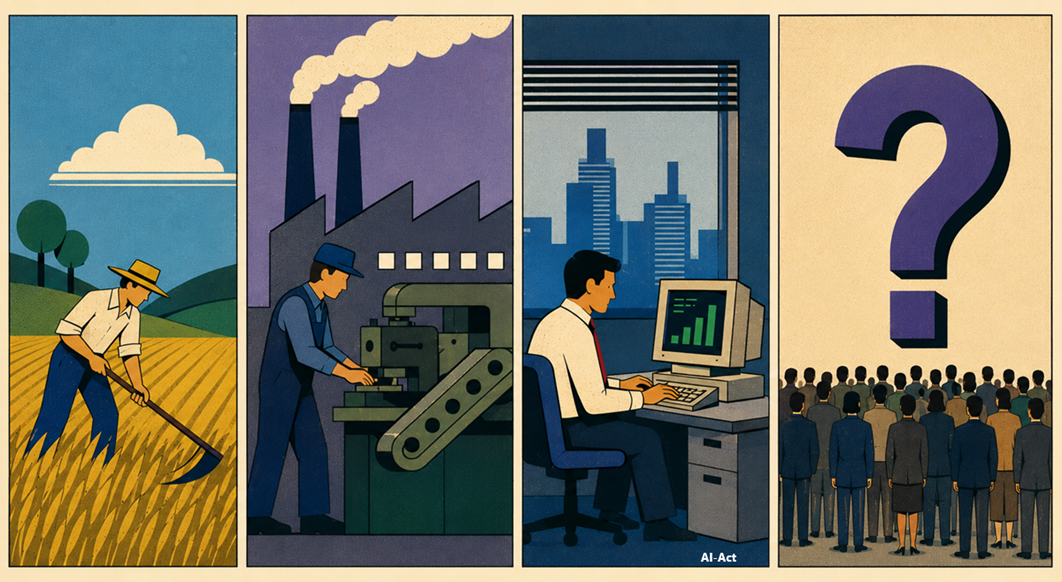
With the Industrial Revolution, under the gold standard, the substitution of labour by capital began in the agricultural sector, later spreading to industry in the second phase. This process was socially disruptive at the start of the Industrial Revolution because income levels were low and the remit of states was limited to core tasks such as internal and external security. Since then, productivity gains driven by technological progress have significantly raised living standards. Therefore, if technological unemployment caused by AI spreads to the service sector, a sufficiently large social buffer will be available. The kind of impoverishment described by Marx is unlikely.
However, whether the social security systems will remain sustainable, hinges on the question of how the high potential of artificial intelligence for productivity gains will be utilised. If the AI-induced productivity gains will be allowed to spread over the whole economy, welfare will increase and the social welfare systems will remain sustainable. If, however, – as in the case of the internet economy – the state absorbs the resulting unemployment through the expansion of unproductive public employment, this will further slow down growth and further increase distribution conflicts.
AI’s productivity potential will only be realised under a tight monetary and fiscal policy, which prevents the misallocation of capital. If Fed chairman Kevin Warsh succeeds in reducing the Fed’s balance sheet, thereby pushing companies and banks towards greater efficiency, then the impact of AI on society will be positive. The resulting productivity gains could be passed on to the population either in the form of higher real wages or a further reduction in working hours. In Europe, where a sustained tightening of fiscal and monetary policy is not in sight due to the high levels of debt in many euro area countries, artificial intelligence could bring about greater economic and social disruptions.
Short-Interview with Tom Bugdalle und Prof. Dr. Gunther Schnabl
What can the AI era learn from the Industrial Revolution?
Gunther Schnabl: Then as now, many people feared that technological progress would destroy their jobs. Today, in contrast to the Industrial Revolution, there are highly developed social security systems that can help mitigate the negative social consequences of mass unemployment, as highlighted by Karl Marx. The more important lesson from the Industrial Revolution, however, is that monetary stability is a crucial prerequisite for technological progress to lead via productivity increases in the whole economy to the creation of new jobs and allow for reductions in working time. The upshot is that the impact of AI on the future of society will strongly depend on how governments respond.
Why are interest rates and monetary policy so important for the development of AI?
Schnabl: The key interest rates set by central banks determine whether an economy grows steadily or overheats, as shown by Nobel Prize winner Friedrich August von Hayek. If money is too cheap, this contributes to overinvestment and stock market speculation in innovative sectors of the economy, as may currently be observed in the AI sector. If interest rates are subsequently raised, unprofitable investment projects have to be abandoned, potentially leading to crises and unemployment. Only then are good investment projects separated from bad ones, allowing new productivity-enhancing technologies to spread throughout the economy and improve welfare for society as a whole. An important prerequisite is, however, that monetary and fiscal policies remain tight. Otherwise, governments may be tempted to prevent technological unemployment by expanding unproductive employment in the public sector. This slows economic growth and contributes to rising inequality, as observed following the pathbreaking innovation of the internet.
If monetary policy is crucial to realising the potential productivity gains from AI, which is better prepared: the Fed or the ECB?
Schnabl: Fed Chair Kevin Warsh aims to shrink the Fed's balance sheet and deregulate small and medium-sized banks. Shrinking the Fed's balance sheet would increase long-term interest rates and thereby force enterprises across the economy to improve their efficiency with the help of AI. If deregulated, small and medium-sized banks could intermediate this process, as they have the skills to distinguish between high- and low-return investment projects. In contrast, the ECB is more likely to maintain a large balance sheet because of high government debt in influential euro-area countries. This makes it more likely that technological unemployment caused by AI will be absorbed through an expansion of employment in publicly financed sectors of the economy. By doing this, the ECB and euro-area governments can prevent unemployment, but they may also impede the growth-enhancing diffusion of AI throughout the economy.
Which professions will be the first to benefit from the AI boom?
Tom Bugdalle: The sectors that directly develop, operate and integrate AI will benefit first. These include chip design and manufacturing, data centres, software, networks, security and consultancy. Construction, cooling and power supply will also benefit. At the same time, routine tasks in numerous industries and companies are coming under pressure because they are easier to automate. Following the agricultural and industrial sectors, the service sector is now set to face a major wave of rationalisation.
What sources do you draw on for your research?
Bugdalle: Our research is based on data and statistics from, amongst others, the OECD, the US Bureau of Labour Statistics, the Federal Reserve, the Bank of England and Our World in Data. In addition, we draw on economic literature on monetary policy, productivity and AI. Above all, however, we rely on our own economic expertise, which we have built up over many years. We hope that our creativity cannot be replaced by AI.
1 In the past, villagers were able to use communal land (commons), for example for grazing livestock. Large landowners had these areas fenced off and turned them into their private property.
2 Schumpeter (1911) refers to this as ‘creative destruction’.
3 In the 1920s, assembly-line production (primarily pioneered by Ford) and the electrification of industry led to major gains in productivity (Hounshell 1984). Hayek recognised the importance of innovation for the economic upturn of the 1920s, but emphasised that the boom was prolonged beyond the equilibrium driven by innovation through an overly expansionary monetary and credit policy. Field (2011) argues that the gains in total factor productivity in the 1920s were concentrated almost exclusively in the manufacturing sector and only began to spread more widely across the entire economy in the 1930s.
4 Similarly, according to Perez (2002), a macroeconomic innovation process proceeds in cycles. During the phase of irruption, a basic technology emerges. Financial capital fuels euphoria and speculative bubbles (frenzy). At the turning point, the bubble bursts and a correction takes place (synergy). In the maturity phase, the new technology spreads throughout the economy. Productivity and prosperity rise across the board.
5 In practice, this required the abolition of the gold standard, which triggered competitive depreciations of the currencies.
6 Unemployment was finally eradicated in many countries as a result of the Second World War, because many men were conscripted into military service.
7 Falling prices were therefore not – as Keynes argued – linked to a persistent recession. Nor did unemployment rise ever higher, as Marx had predicted.
8 When workers move into new sectors, they require different skills, which can usually only be acquired after a certain delay. This gives rise to what is known as frictional unemployment. Today, the economy is highly specialised, and so too are the skill profiles required in many occupations. On the other hand, in many service-oriented professions that emerge as prosperity increases, the skill requirements are comparatively low.
9 In 1987, Robert Solow remarked that ‘the computer age is everywhere except in the productivity statistics’.
10 Banerjee et al. (2024) foresee a widespread ‘zombification’ of the global economy due to persistently low interest rates.
11 On a logarithmic scale, the price increase during the AI boom would appear significantly less pronounced relative to the dotcom bubble.
12 However, the potential cost-saving effects could be limited by the need to prevent AI agents from getting out of control (see Guccione and Fryba 2026).
13 In the financial sector, for example, there is routine work – that is, standardisable processes in back-office operations, administration, reporting and customer service – which can be largely automated using AI. On the other hand, there are judgement-dependent tasks that require human interaction and personal responsibility, which cannot be carried out by AI (Immenkötter 2026).
14 This is made possible by ‘agent-based’ AI, which takes on coordination and reporting tasks that were previously carried out by managers. The span of control for each remaining manager increases. Autor (2024) argues that occupations consisting of a mix of different tasks – e.g. technical knowledge, social interaction, judgement, improvisation, situational decision-making and physical dexterity – are more resilient to AI. The more ‘messier’ (diverse) the job profile, the less at risk it is from AI.
15 The sharp rise in asset prices led to an overestimation of aggregate economic productivity. See Haldane et al. (2010).
16 The currently very low unemployment rates in the US and Germany are likely to be linked to the expansion of government spending – indirectly financed by central banks – and the associated creation of numerous jobs in state-funded sectors of the economy.
17 A reduction in the time required to complete work processes due to AI could result in longer breaks or extended periods of unproductive work from home. Alternatively, governments could use the higher productivity in industry and the service sector as an opportunity to raise taxes and, with the additional fiscal leeway, allowing to increase the number of jobs in the public sector.
18 Groundbreaker (2026) sees clear parallels with the US mortgage market boom between 2003 and 2007.
19 Acemoglu (2024) forecasts a maximum annual increase in total factor productivity of up to 0.66 per cent over a 10-year period. Aghion and Bunel (2024), based on a historical comparison, estimate additional annual productivity growth of between 0.8 and 1.3 percentage points over a 10-year period. The Federal Reserve Bank of St. Louis (2026) attributes around one percentage point of real GDP growth in the first three quarters of 2025 to AI.
20 “Americans would benefit from higher take-home pay and greater purchasing power if only the Federal Reserve’s leadership stopped defending its mistakes and started correcting them.” (Warsh 2025). According to Warsh, the Federal Reserve has stifled growth through persistently low interest rates and the expansion of its balance sheet, and has caused negative distributional effects that favour the wealthier parts of the population (Bugdalle and Schnabl 2026).
References:
Acemoglu, Daron (2024): The Simple Macroeconomics of AI. NBER Working Paper 32487.
Adams, Gina Martin / Casper, Michael / Sanders, Matthew (2026): A Deep Dive: Magnificent-Seven’s Breakup Continues Amid Capex Boom. HB Wealth, 7 May 2026. Available at: https://hbwealth.com/insights/a-deep-divemagnificent-sevens-breakup-continues-amid-capex-boom/ (accessed on: 1 August 2026).
Aghion, Philippe / Bunel, Simon (2024): AI and Growth: Where Do We Stand? Federal Reserve Bank of San Francisco, June 2024. Available at: https://www.frbsf.org/wp-content/uploads/AI-and-Growth-Aghion-Bunel.pdf (Accessed on: 1 August 2026).
Autor, David (2024): Applying AI to Rebuild Middle Class Jobs. NBER Working Paper 32140.
Banerjee, Ryan / Doerr, Sebastian / Hofmann, Boris (2024): Whither the Walking Dead? The Consequences of Artificial Intelligence for Zombie Firms. The Economists’ Voice 21 (2), 237–248.
Boyle, Matthew (2026): Why Companies Are Cutting Middle Managers in the AI Era. Bloomberg, 17 June 2026. Available at: https://www.bloomberg.com/news/articles/2026-06-17/why-companies-are-cutting-middle-managers-in-the-ai-era (accessed on: 1 August 2026).
Brynjolfsson, Erik / McAfee, Andrew (2014): The Second Machine Age. New York: W. W. Norton.
Bugdalle, Tom / Schnabl, Gunther (2026): US Fed: Kommt die Warsh-Wende? Flossbach von Storch Research Institute, 18 May 2026. Available at: https://www.flossbachvonstorch-researchinstitute.com/de/kommentare/detail/us-fed-kommt-die-warsh-wende (accessed on: 1 August 2026).
Cowen, Tyler (2011): The Great Stagnation: How America Ate All the Low-Hanging Fruit of Modern History, Got Sick, and Will (Eventually) Feel Better. New York: Dutton.
Crosley, Blake (2026): Hyperscaler CapEx Hits $600B in 2026: The AI Infrastructure Debt Wave. Introl, 7 January 2026. Available at: https://introl.com/blog/hyperscaler-capex-600b-2026-ai-infrastructure-debt-january-2026 (Accessed on: 1 August 2026).
Ellis, Lindsay / Elinson, Zusha / Li, Tina (2026): The AI Backlash Has Tech Executives Fearing for Their Lives. The Wall Street Journal, 15 July 2026. Available at: https://www.wsj.com/us-news/the-ai-backlash-has-tech-executives-fearing-for-their-lives-30c43972 (accessed on: 1 August 2026).
Feenstra, Robert C. / Inklaar, Robert / Timmer, Marcel P. (2015): The Next Generation of the Penn World Table. American Economic Review 105 (10), 3150–3182.
Field, Alexander (2011): A Great Leap Forward: The 1930s Depression and US Economic Growth. New Haven: Yale University Press.
Ford, Martin (2021): Rule of the Robots: How Artificial Intelligence Will Transform Everything. New York: Basic Books.
Freeman, Peter / Aspray, William (1999): The Supply of Information Technology Workers in the United States. Washington, D.C.: Computing Research Association.
Friedman, Milton (1970): The Counter-Revolution in Monetary Theory. London: Institute of Economic Affairs.
Gompers, Paul / Lerner, Josh (2001): The Venture Capital Revolution. Journal of Economic Perspectives 15 (2), 145–168.
Gordon, Robert (2016): The Rise and Fall of American Growth: The U.S. Standard of Living since the Civil War. Princeton, NJ: Princeton University Press.
Groundbreaker (2026): The Second Derivative: Why No One Understands the AI Boom. 2 July 2026. Available at: https://www.groundbrkr.com/p/the-second-derivative-why-no-one (Accessed on: 1 August 2026).
Guccione, Darren / Fryba, Martin (2026): Systemische Fragilität: KI außer Kontrolle bedroht kritische Infrastruktur. CRN, 17 February 2026. Available at: https://www.crn.de/news/2026/systemische-fragilitat-ki-au-er-kontrolle-bedroht-kritische-infrastruktur (Accessed on: 1 August 2026).
Haldane, Andrew / Brennan, Simon / Madouros, Vasileios (2010): The Contribution of the Financial Sector: Miracle or Mirage? In: Haldane, Andrew / Woolley, Paul / Wadhwani, Sushil / Goodhart, Charles / Smithers, Andrew / Large, Andrew / Kay, John / Wolf, Martin / Boone, Peter / Johnson, Simon / Layard, Richard (eds.): The Future of Finance: The LSE Report. London: London School of Economics and Political Science, pp. 87–120.
Hauptmann, Gerhart (1892): Die Weber. Schauspiel aus den vierziger Jahren. Berlin: S. Fischer.
Hayek, Friedrich A. von (1931): Prices and Production. London: George Routledge & Sons.
Hounshell, David A. (1984): From the American System to Mass Production, 1800–1932. The Development of Manufacturing Technology in the United States. Baltimore: Johns Hopkins University Press.
Huberman, Michael / Minns, Chris (2007): ‘The Times They Are Not Changin’: Days and Hours of Work in Old and New Worlds, 1870–2000. Explorations in Economic History 44 (4), 538–567.
Immenkötter, Philipp (2026): Haben Sie auch wieder Angst vor der KI? Flossbach von Storch Research Institute, 27 April 2026. Available at: https://www.flossbachvonstorch-researchinstitute.com/de/kommentare/detail/haben-sie-auch-wieder-angst-vor-der-ki (Accessed on: 1 August 2026).
Jorgenson, Dale / Ho, Mun / Stiroh, Kevin (2008): A Retrospective Look at the U.S. Productivity Growth Resurgence. Journal of Economic Perspectives 22 (1), 3–24.
Kenney, Martin / Han, Kyonghee / Tanaka, Shoko (2004): The Globalisation of Venture Capital: The Cases of Taiwan and Japan. In: Bartzokas, Anthony / Mani, Sunil (eds.): Financial Systems, Corporate Investment in Innovation, and Venture Capital. Cheltenham/Northampton, MA: Edward Elgar, pp. 52–84.
Keynes, John Maynard (1936): The General Theory of Employment, Interest and Money. London: Macmillan.
Krippner, Greta (2011): Capitalising on Crisis: The Political Origins of the Rise of Finance. Cambridge, MA: Harvard University Press.
Le, Thao (2026): The Great Flattening: Why Companies Are Cutting Middle Managers and What HR Leaders Are Missing. Lepaya, 1 May 2026. Available at: https://www.lepaya.com/blog/insights-great-flattening-middle-management-ai (Accessed on: 1 August 2026).
Levine, Adam (2026): Beyond Capex: Big Tech Quietly Locks In $2.7 Trillion in Long-Term Commitments. Barron’s, 5. August 2026. Available at: https://www.barrons.com/articles/tech-stocks-ai-spending-capex-554475b7 (Accessed on: 9 August 2026).
Marx, Karl (1867): Das Kapital. Kritik der politischen Oekonomie Volume I. Book I: Der Produktionsprocess des Kapitals. Hamburg: Published by Otto Meissner.
Mill, John Stuart (1848): Principles of Political Economy with Some of Their Applications to Social Philosophy. London: John W. Parker.
Mises, Ludwig von (1912): Theorie des Geldes und der Umlaufsmittel. München und Leipzig: Duncker & Humblot.
North, Douglass C. (1990): Institutions, Institutional Change and Economic Performance. Cambridge: Cambridge University Press.
OECD (2023): Employment Outlook 2023: Artificial Intelligence and the Labour Market. Paris: OECD.
Perez, Carlota (2002): Technological Revolutions and Financial Capital: The Dynamics of Bubbles and Golden Ages. Cheltenham, UK: Edward Elgar.
Polanyi, Karl (1944): The Great Transformation: The Political and Economic Origins of Our Time. New York: Farrar & Rinehart.
Ray, Siladitya (2026): Elon Musk Touts Universal Income As Remedy To AI-Driven Unemployment. Forbes, 17 April 2026. Available at: https://www.forbes.com/sites/siladityaray/2026/04/17/elon-musk-touts-universal-income-as-remedy-to-ai-driven-unemployment/ (accessed on: 1 August 2026).
Rubinton, Hannah / Patro, Bontu Ankit (2026): Tracking AI’s Contribution to GDP Growth. On the Economy, Federal Reserve Bank of St. Louis, 12 January 2026. Available at: www.stlouisfed.org/on-the-economy/2026/jan/tracking-ai-contribution-gdp-growth (accessed on: 1 August 2026).
Samuelson, Paul A. (1948): Economics: An Introductory Analysis. 1st ed. New York: McGraw-Hill Book Company.
Samuelson, Paul A. / Solow, Robert M. (1960): Analytical Aspects of Anti-Inflation Policy. American Economic Review 50 (2), 177–194.
Schnabl, Gunther (2024): Deutschlands fette Jahre sind vorbei. München: FinanzBuch Verlag.
Schnabl, Gunther (2025): Platzt bald eine KI-Blase? Flossbach von Storch Research Institute, 17 November 2025. Available at: https://www.flossbachvonstorch-researchinstitute.com/de/kommentare/detail/platzt-bald-eine-ki-blase (Accessed on: 1 August 2026).
Schumpeter, Joseph A. (1911): Theorie der wirtschaftlichen Entwicklung. Leipzig: Duncker & Humblot.
Thurow, Lester (1980): The Zero-Sum Society: Distribution and the Possibilities for Economic Change. New York: Basic Books.
Warsh, Kevin (2025): The Federal Reserve’s Broken Leadership: Americans Would Have Higher Pay and Greater Purchasing Power if the Fed Got Its Act Together. The Wall Street Journal, 16 November 2025. Available at: https://www.wsj.com/opinion/the-federal-reserves-broken-leadership-43629c87 (accessed on: 1 August 2026).
Wigglesworth, Robin (2025): The Global Data Centre and AI Build-Out Will Be an Extraordinary and Sustained Capital Markets Event: Inside JPMorgan’s Big Data Centre Report. Financial Times, FT Alphaville, 11 November 2025. Available at: https://www.ft.com/content/59133fa3-3071-47b4-8761-c6922d07c34e (accessed on: 1 August 2026).
World Economic Forum (2025): Future of Jobs Report 2025: 78 Million New Job Opportunities by 2030 but Urgent Upskilling Needed to Prepare Workforces. World Economic Forum, 8 January 2025. Available at: https://www.weforum.org/press/2025/01/future-of-jobs-report-2025-78-million-new-job-opportunities-by-2030-but-urgent-upskilling-needed-to-prepare-workforces/ (accessed on: 1 August 2026).
Zuckerberg, Mark (2023): Update on Meta’s Year of Efficiency. about.fb.com, 14 March 2023. Available at: https://about.fb.com/news/2023/03/mark-zuckerberg-meta-year-of-efficiency/ (Accessed on: 1 August 2026).

About the author
Gunther Schnabl heads the Flossbach von Storch Research Institute & is a professor at the University of Leipzig. He was an advisor at the European Central Bank and has conducted research at the Universities of Paris 1 Panthéon-Sorbonne, Stanford & Tokyo.

About the author
Research analyst and research assistant for economic policy at the University of Leipzig. Adam Smith and Carl Menger Fellow at the Mercatus Centre. Studied economics in Leipzig and Paris.



Legal notice
The information contained and opinions expressed in this document reflect the views of the author at the time of publication and are subject to change without prior notice. Forward-looking statements reflect the judgement and future expectations of the author. The opinions and expectations found in this document may differ from estimations found in other documents of Flossbach von Storch SE. The above information is provided for informational purposes only and without any obligation, whether contractual or otherwise. This document does not constitute an offer to sell, purchase or subscribe to securities or other assets. The information and estimates contained herein do not constitute investment advice or any other form of recommendation. All information has been compiled with care. However, no guarantee is given as to the accuracy and completeness of information and no liability is accepted. Past performance is not a reliable indicator of future performance. All authorial rights and other rights, titles and claims (including copyrights, brands, patents, intellectual property rights and other rights) to, for and from all the information in this publication are subject, without restriction, to the applicable provisions and property rights of the registered owners. You do not acquire any rights to the contents. Copyright for contents created and published by Flossbach von Storch SE remains solely with Flossbach von Storch SE. Such content may not be reproduced or used in full or in part without the written approval of Flossbach von Storch SE.
Reprinting or making the content publicly available – in particular by including it in third-party websites – together with reproduction on data storage devices of any kind requires the prior written consent of Flossbach von Storch SE.
© 2024 Flossbach von Storch. All rights reserved.